Tensile Fabric Structures Ruwais
Shade Structures Designed for Ruwais's Climate
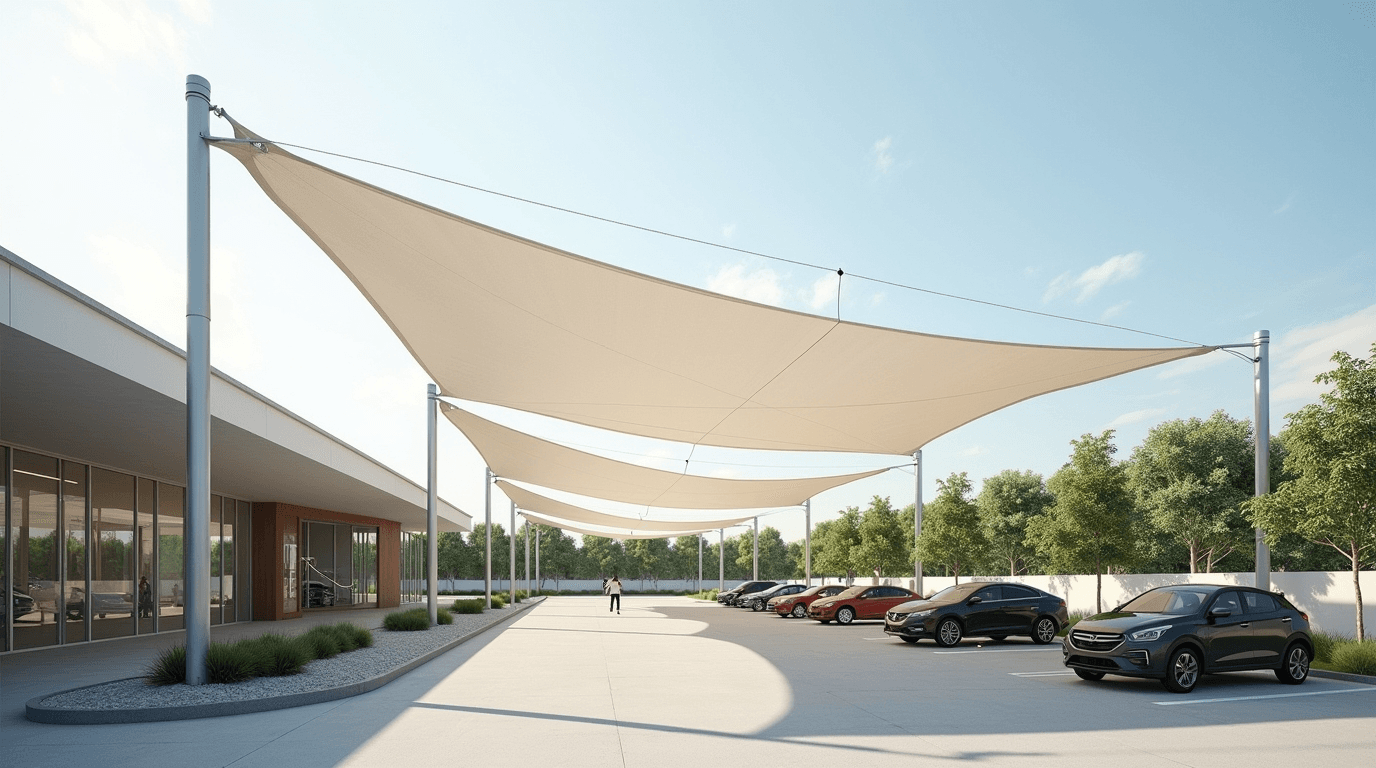
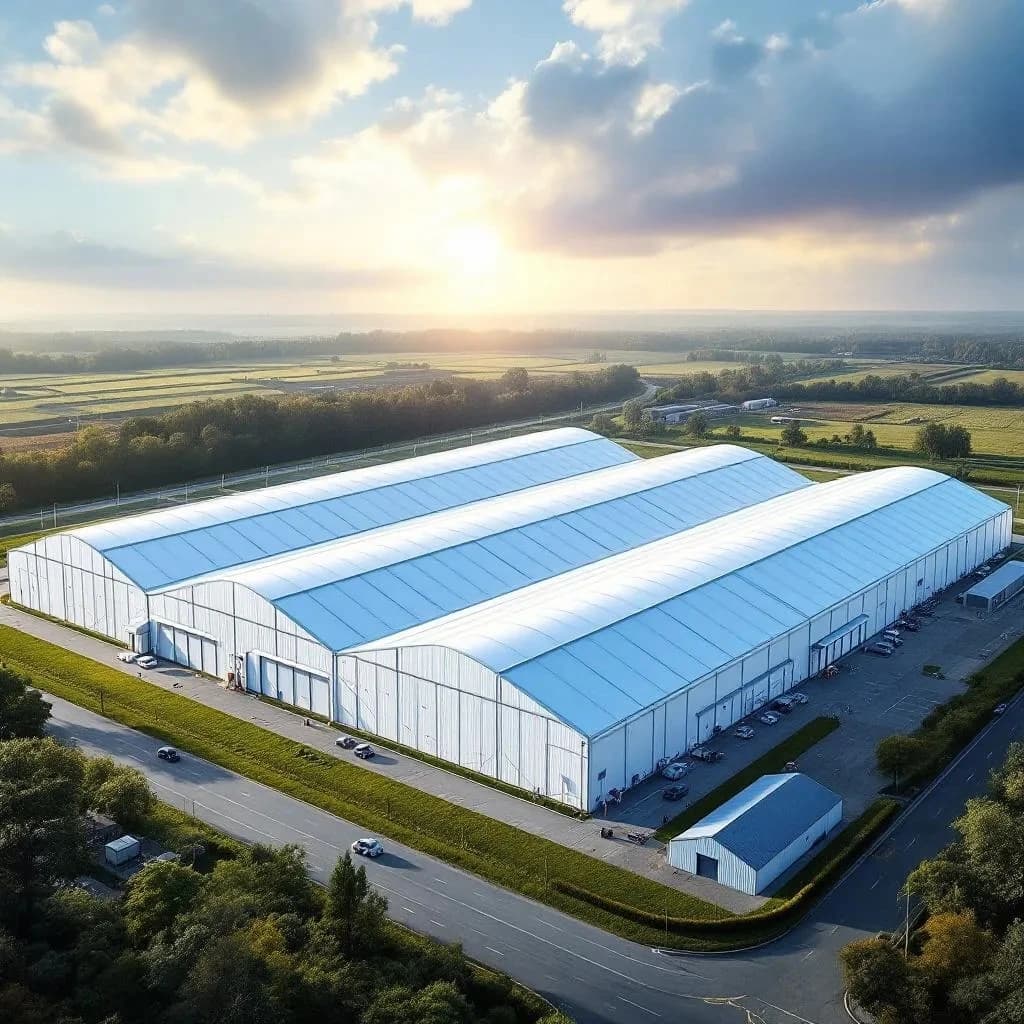
Ruwais needs shade at industrial scale: over contractor yards, equipment laydown areas, bus shelters and walkways in the housing complex, and the outdoor spaces of the facilities that serve the refinery city. A tensile fabric structure is often the fastest way to cover a large area there, and we engineer them for Al Dhafra's heat, dust and open-desert wind with heavier steel, PVDF-coated PVC or PTFE membranes and foundations designed for the ground on site.
Because Ruwais is a long way from our Sharjah facility, a project is delivered as a campaign: one survey, calculations and drawings completed and approved before fabrication, every mast, cable and membrane made and checked in the yard, and an installation crew on site until the structures are tensioned and handed over. That discipline suits the clients here — operators, contractors and the housing complex — who plan work in the same way.
See the full range: Tensile & Sail Shades
Our Shade Products Across Ruwais
From residential villas to commercial complexes, hospitality venues to government facilities — we deliver the full range of shade solutions across Ruwais.
Areas We Serve Across Ruwais
Our installation teams mobilise from our Sharjah manufacturing facility to every neighbourhood and district in Ruwais, including:
Recent Ruwais Project Highlights
School Playground Tensile Sail — Ruwais Housing Complex, Ruwais
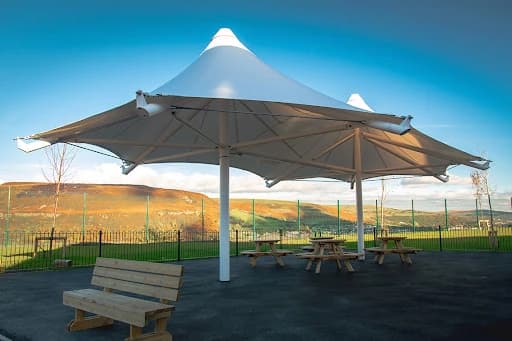
Multi-cone tensile sail shade structure over a primary school playground. HDPE knitted shade cloth blocking 95% UV, installed during a 5-day school holiday window with full Ruwais Municipality approval.
Mosque Prayer Area Membrane — Western Industrial District, Ruwais
PTFE-coated woven glass tensile membrane over a mosque outdoor prayer area. Designed for cultural sensitivity, 30-year design life, and seamless integration with the mosque architecture.
Sports Facility Tensile Roof — Mirfa, Ruwais
Large-span tensile fabric roof over a multi-purpose sports court. PVDF-coated PVC, engineered for full Ruwais wind-load standards, including LED match-lighting integration.
Why Ruwais Clients Choose Dhilal Al Qamar
Ruwais Climate Engineered
Every structure is designed for Ruwais's heat, UV intensity, and seasonal wind loads — not generic imports.
In-House Manufacturing
Our Sajja, Sharjah facility fabricates every structure under quality control before delivery to Ruwais.
Own Installation Crews
Ruwais installations are completed by our trained teams — not subcontractors — for accountability and finish quality.
Warranty & Support
5–10 year fabric warranty and 10+ year structural warranty across every Ruwais project.
Ruwais Shade Solutions — Frequently Asked Questions
What are the benefits of tensile fabric structures over traditional roofs?+
For Ruwais projects, tensile fabric wins over a conventional roof on weight, natural light and the ability to span large areas from only a few columns. In Ruwais, those strengths make them practical for car parks, walkways, rest areas, school playgrounds and communal spaces in housing compounds, where large shaded areas are needed without cluttering the ground with columns. Lighter structures need smaller foundations and install faster, which helps keep work inside active compounds short. The membrane reflects much of the sun's heat, which matters in the Western Region's extreme summers. We specify materials that stand up to Ruwais's industrial atmosphere.
Are tensile fabric structures suitable for high winds in Ruwais?+
Ruwais sits on open, flat terrain where winds can be strong, and our tensile structures there are engineered accordingly. Each design is calculated to the wind requirements of the Abu Dhabi authorities for its site, and inside compounds it also meets the facility's own engineering standards. The membrane shape, cables, masts and foundations are sized for the exposure, and the fabric is tensioned precisely so it stays stable. We provide full calculations, drawings and method statements for the compound's engineering review. Periodic inspection of tension and fixings, ideally twice a year in Ruwais, keeps the structure safe.
How long do the membranes last?+
Membrane life in Ruwais depends on the fabric and on the industrial environment. PTFE-coated glass fabric can last more than 25 years, PVDF-coated PVC typically 15-20 years and HDPE shade fabric around 8-12 years. Industrial fumes and dust can attack coatings and dull membranes, so we favour PTFE or high-grade PVDF-coated fabrics for permanent structures and recommend regular cleaning. Keeping the membrane correctly tensioned prevents wear from flapping in the wind. Steel must be hot-dip galvanised with an additional protective coating. When the membrane is replaced, the steel structure can usually be reused.
Can they be illuminated at night?+
Tensile membranes can be lit at night, glowing when lit from below, and can also carry LED projection. In Ruwais, lighting turns tensile canopies over communal areas, walkways, sports courts and gathering spaces in housing compounds into safe, pleasant places to use in the cooler evenings, which is when most residents are outdoors. We design lighting with the structure, concealing fittings and cables in the masts and edges, and specify fittings rated for heat, dust and the industrial atmosphere. For compounds, lighting can be connected to timers or to the compound's existing controls, and we test everything before handover.
Tensile Fabric Structures — Full Product Range
Tensile Fabric Structures in Other UAE Cities
Other Shade Services in Ruwais
Let’s Build Your Perfect Shade
Your ideal car parking shade is just a call away. Our expert team is ready to guide you with the best solutions tailored to your needs.