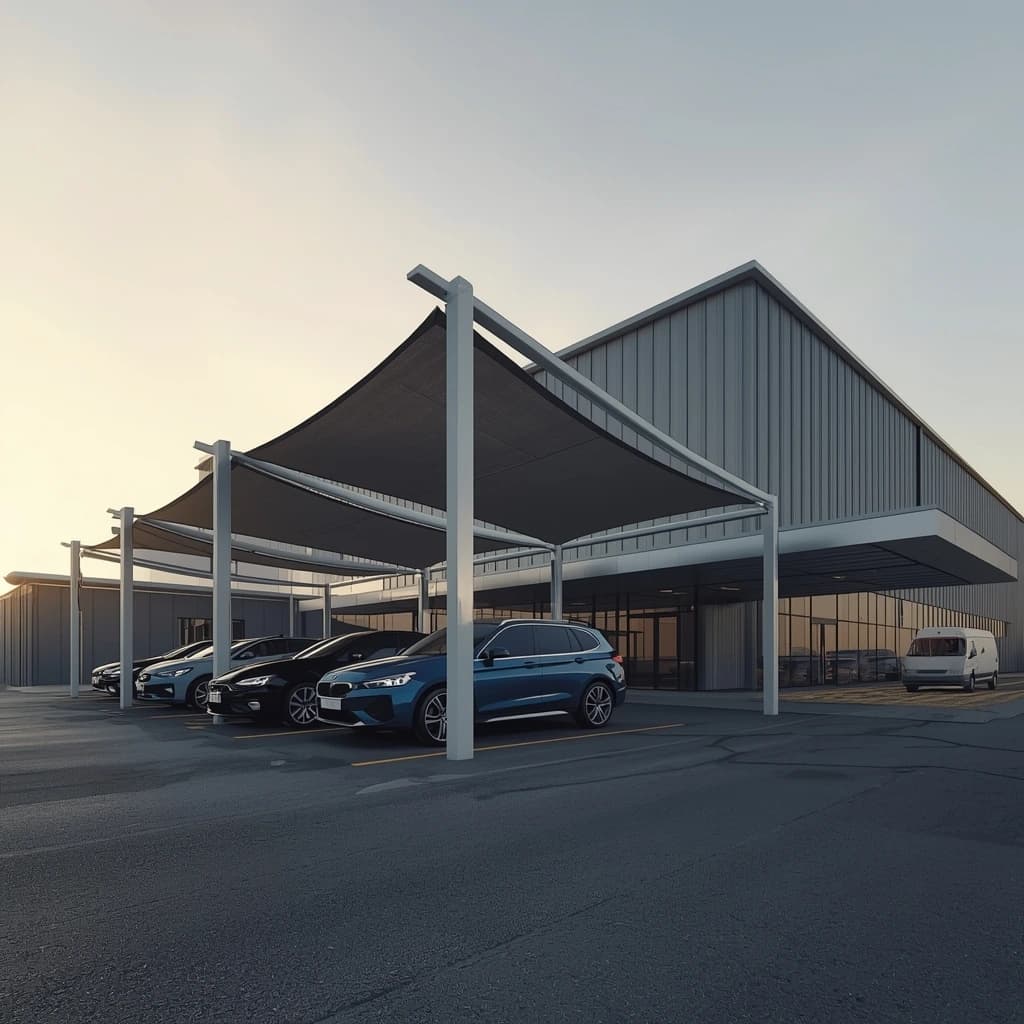
Shade Structures Across the UAE
The Complete UAE Shade Structures Guide
The United Arab Emirates presents one of the most demanding outdoor environments anywhere in the world. Surface temperatures routinely exceed 50°C between June and September, ultraviolet intensity is sustained at levels that degrade most polymers within two to three years, and Shamal sandstorms deliver impulse wind loads several times greater than the average. Coastal salt, humidity swings, and occasional but intense winter rainfall add further stress. A shade structure designed for European or Mediterranean conditions will fail predictably in the UAE; one designed for the UAE will last for decades.
Dhilal Al Qamar Tents & Shades Industry has spent more than twelve years engineering, manufacturing and installing shade structures across Dubai, Abu Dhabi, Sharjah and the northern emirates. Every structure that leaves our Sajja, Sharjah facility is calibrated to the UAE climate — UV-stabilised fabrics, hot-dip galvanised or marine-grade aluminium frames, wind-load calculations tuned to local municipality codes, and installation crews that have seen every site condition the country offers.
This page is the entry point to our complete product range. Whether you are protecting a villa car park in Jumeirah, building a hotel cabana cluster on Saadiyat Island, or installing playground shades at a Sharjah school, the right structure starts with the right fabric, the right frame, the right municipal compliance, and the right installation team — all of which we deliver in-house.
Nine Product Families, One Manufacturer
Each category links to a dedicated hub with subcategories, specifications, and recent UAE installations.
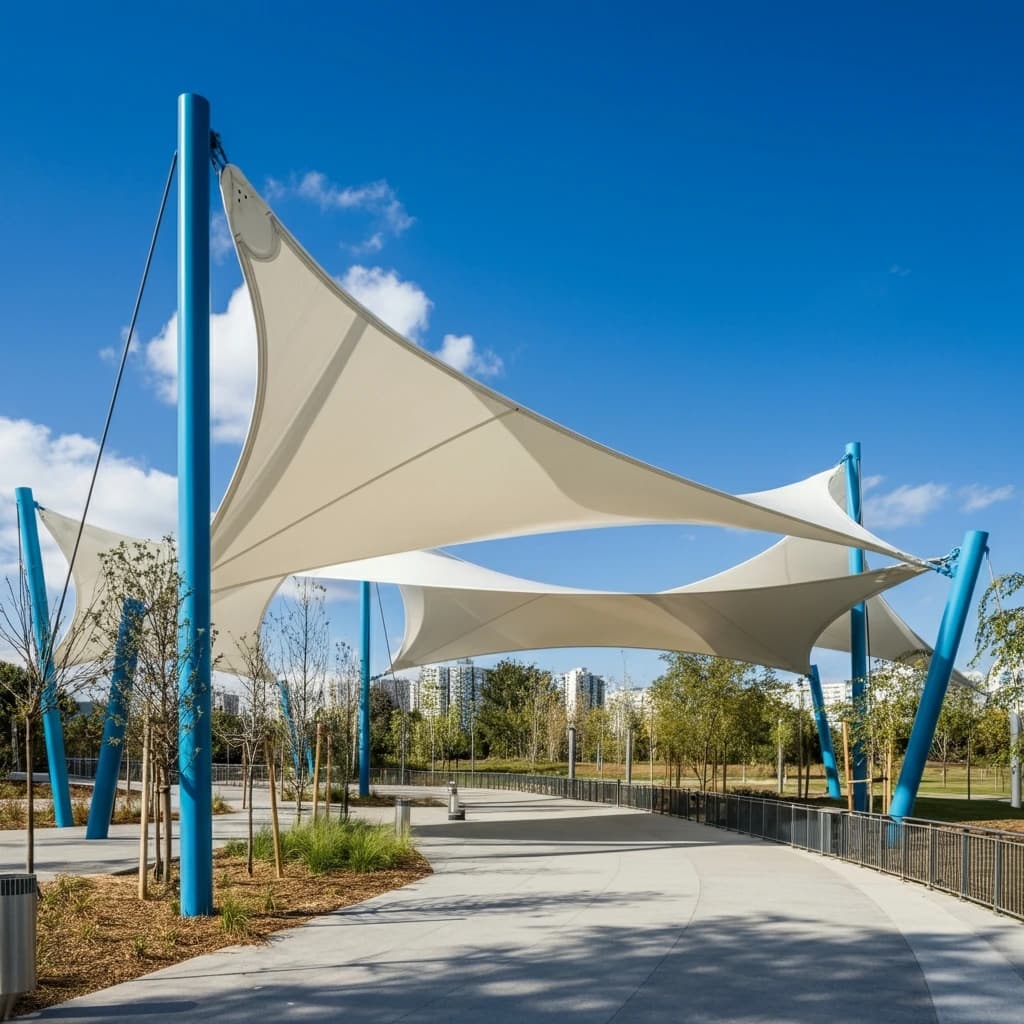
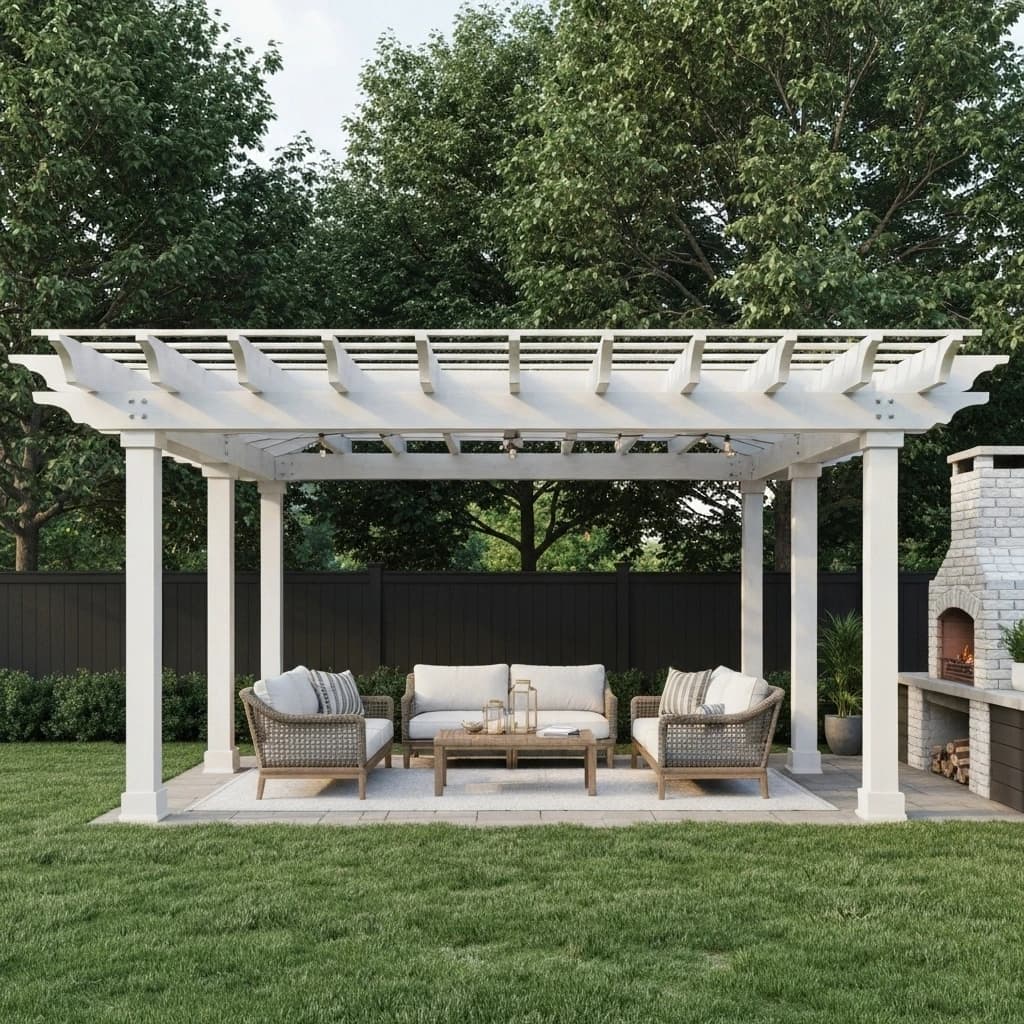
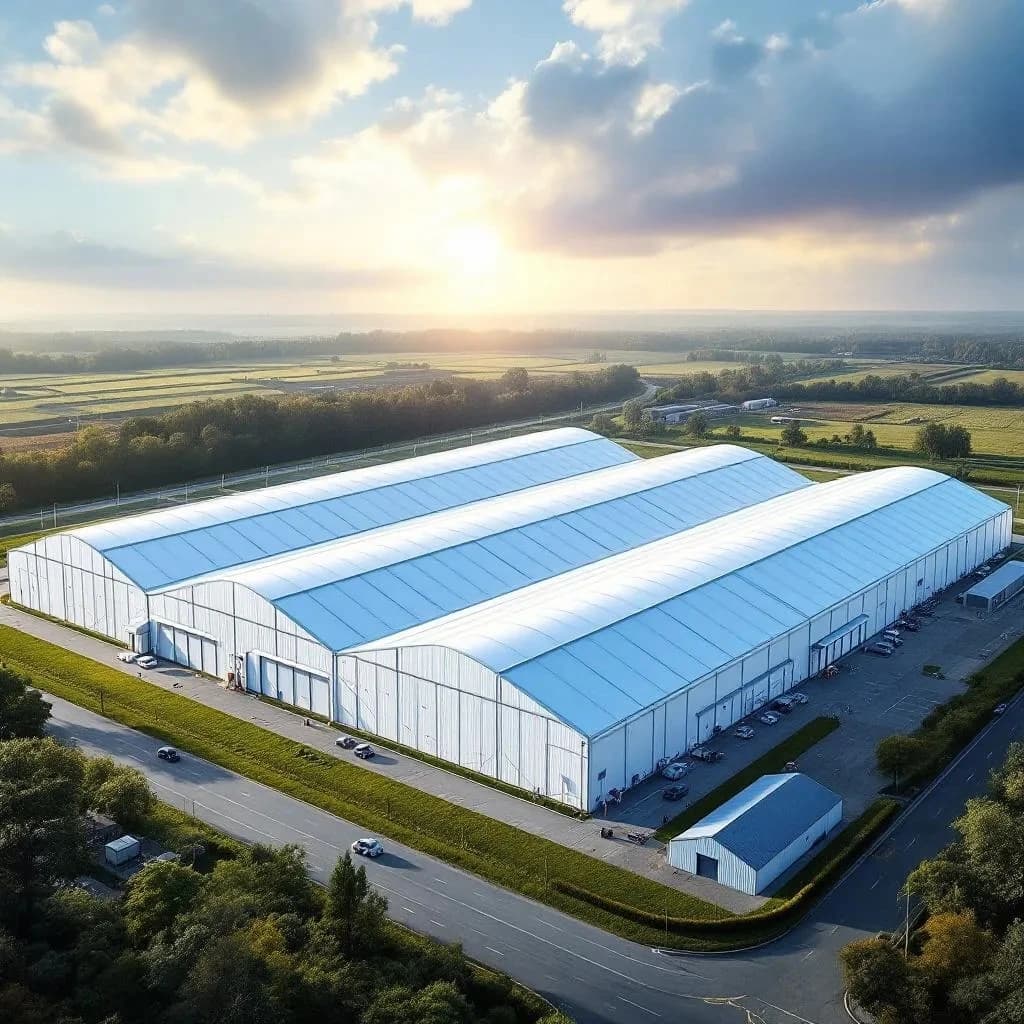
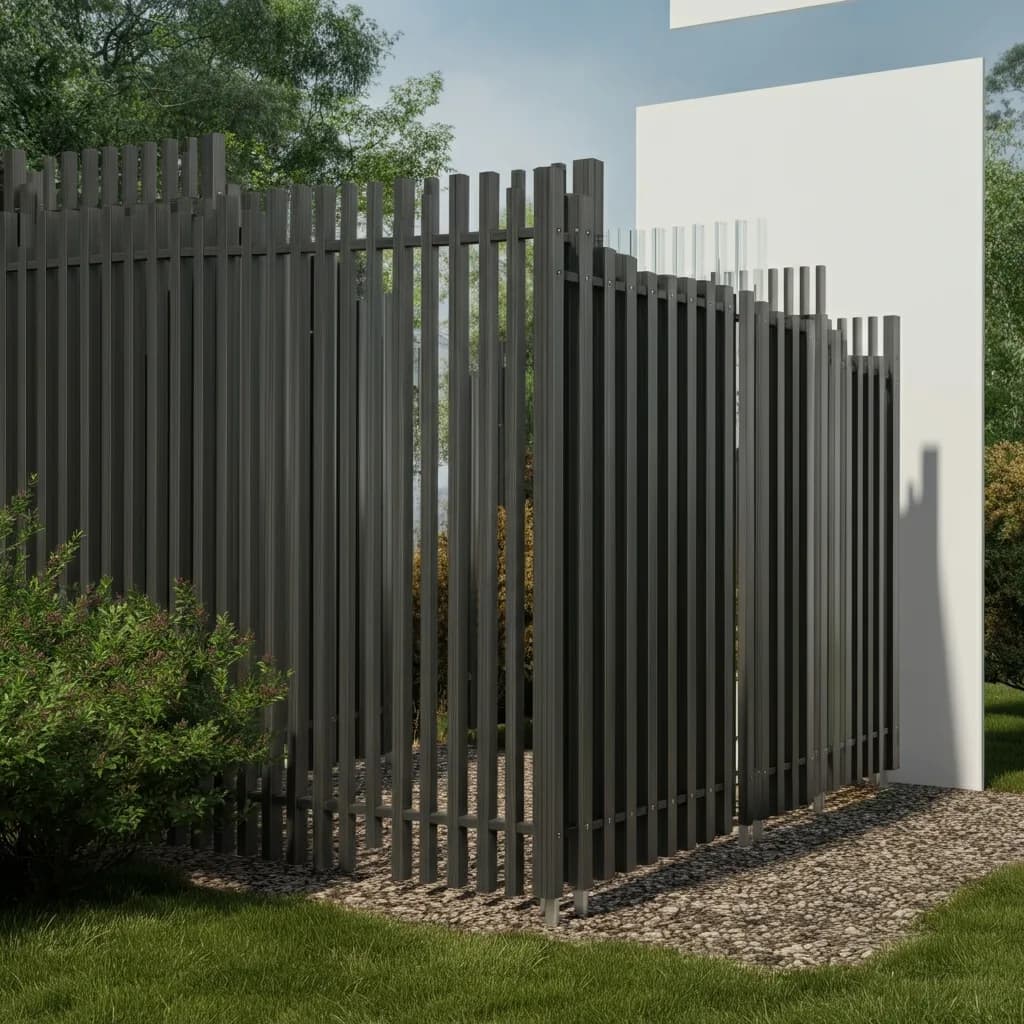
Engineering for the UAE Climate
UAE shade design begins with four climate variables that drive every engineering choice: ultraviolet intensity, peak surface temperature, wind load, and exposure to airborne contaminants.
Ultraviolet and Heat
Direct summer UV in the UAE measures consistently at index 11+ during midday hours — the highest WHO category. Uncoated polymer fabrics chalk, embrittle and fade within 18–24 months under that exposure. PVDF-coated PVC, the dominant fabric for permanent installations, carries a fluoropolymer surface layer that reflects and dissipates UV before it reaches the structural PVC core. PTFE membranes are even more resistant — effectively chemically inert under UV — and are used where 25+ year service life is required. HDPE knitted shade cloth, the economy option, achieves 95% UV blocking but accepts gradual UV-driven degradation within its five-year warranty window.
Wind and Sandstorm Loading
Shamal events bring sustained 60–80 km/h winds across the UAE with recorded gust peaks above 120 km/h. Every shade structure we design is calculated against the highest recorded gust for the project postcode plus a structural safety factor consistent with UBC/ASCE recommendations. Tensile sails are particularly wind-sensitive — incorrect tensioning is the most common cause of failure on imported sails. Our tensile installations use stainless turnbuckles and load-cell calibration to achieve the design pre-tension that prevents flutter and fatigue.
Coastal Salt and Corrosion
Within roughly 500 metres of the Gulf shoreline, chloride-laden air accelerates corrosion of unprotected steel by a factor of three to five. For coastal Dubai (Marina, Palm Jumeirah, JBR), coastal Abu Dhabi (Corniche, Saadiyat, Yas), and Sharjah's Al Khan and Al Mamzar areas, we specify either marine-grade aluminium 6061-T6 extrusions or extra-thick hot-dip galvanised steel finished with a polyurethane top-coat. Fastener selection moves to stainless A4 (316) grade in these conditions. Inland projects in Mirdif, Dubai South, Khalifa City, or industrial Sajja use standard hot-dip galvanised steel with A2 stainless fasteners — a substantially lower-cost specification that delivers the same service life away from the coast.
Rainwater and Drainage
UAE rainfall is rare but intense — convective storms can deliver 30–60 mm in a single hour. Tensile and pyramid roof shades are self-draining when correctly cambered; flat-roof structures (K-span, GRP roof) require integrated guttering and downpipes sized for those peak events. Conical and umbrella car parking shades use central drainage columns. Pergola louver systems incorporate integrated rainwater channels along the bearing beams. Every permanent installation is designed for the rainfall it will see — we do not retrofit drainage after the fact.
Installed Across Every Emirate
Dedicated city hubs cover Dubai, Abu Dhabi, and Sharjah with neighbourhood-level service detail. Our crews also reach Ajman, Umm Al Quwain, Ras Al Khaimah, and Fujairah from Sajja within the working day.
Dubai
Villa compounds in Jumeirah and Arabian Ranches, commercial decks in Business Bay and JLT, hotel cabanas along the Marina. Reachable from Sajja within the working day.
Explore Dubai →Abu Dhabi
Saadiyat villas, Yas Island hospitality, Khalifa City compounds, and Mussafah industrial parking. Coastal-grade specifications for salt-laden Corniche locations.
Explore Abu Dhabi →Sharjah
Our home emirate — fastest mobilisation, deepest project density. From Al Majaz waterfront to Al Nahda residential, Industrial Areas 1–18 to University City.
Explore Sharjah →Materials We Specify Across the UAE
Materials selection is where most imported shade structures fail. UAE conditions require fabrics and frames that have been validated for sustained high-UV, high-temperature, and (often) high-salt environments. Our material library is restricted to manufacturers with proven UAE service records.
PVDF-Coated PVC Fabric
The default fabric for car parking shades, tensile sails, and larger pergola fabric roofs. Available in 650, 850, 1050, and 1300 GSM weights depending on span and wind exposure. Suppliers include Mehler, Sioen, Heytex, and Serge Ferrari, all with established European supply chains and UAE distribution. Warranty is typically 5 years against UV degradation and 10 years against structural failure of the coating.
HDPE Knitted Shade Cloth
Used where UV blocking matters more than waterproofing — school playgrounds, livestock paddocks, agricultural shade, and economy car parking shades for back-of-house parking. 95% UV block, allows air circulation, lighter weight reduces structural cost. 5-year warranty.
PTFE Membrane
Premium architectural fabric used for landmark installations, airport canopies, stadium roofs, and high-end hospitality. Effectively chemically inert under UV. Self-cleaning. 25+ year service life. Cost is roughly 3–4× PVDF-coated PVC; specification decisions are usually architectural rather than economic.
Hot-Dip Galvanised Steel
The default structural frame for inland UAE installations. Zinc coating thickness is specified based on exposure — 80 microns for standard inland projects, 120+ microns for projects near industrial emissions or coastal zones. Joints are designed to drain rather than collect moisture, eliminating the most common corrosion initiation point.
Marine-Grade Aluminium
6061-T6 extrusions with optional anodising or powder coating. Used for coastal installations and for projects where weight matters — rooftop pergolas, large cantilever shades, and motorised louver systems. Effectively immune to chloride corrosion when correctly specified.
WPC and GRP
Wood-Plastic Composite and Glass-Reinforced Plastic are used for pergola and gazebo applications where the look of wood is wanted without the maintenance. Both materials are UV-stable in the UAE climate and require no annual sealing.
Why UAE Clients Choose Dhilal Al Qamar
UAE Climate Engineered
Every structure is calibrated for 50°C surface temperatures, peak UV, and Shamal sandstorm wind loads — not generic imports.
In-House Manufacturing
Our Sajja, Sharjah facility fabricates every component under quality control before delivery — no white-label resale.
Own Installation Crews
Every UAE installation is completed by our trained teams, not subcontractors — full accountability for finish quality.
Warranty Across the Range
5–10 year fabric warranty, 10+ year structural warranty across every product family, every emirate, every project size.
Sector Applications Across the UAE
Residential — Villas and Townhouses
Villa car parking shades (one to four bays), pool-deck pergolas, garden gazebos, terrace umbrellas, and boundary privacy fencing. Designed to match existing villa architecture in cream, sand, white or modern grey palettes. Typical project: 3–7 day end-to-end timeline with single-day installation.
Commercial — Offices, Malls and Mixed-Use
Visitor and staff car parking decks (10–500+ bays), entrance canopies, walkway shades, courtyard pergolas, food-court tensile roofs. Built to municipality compliance with stamped engineering submissions and structural warranties on the order of 10 years.
Hospitality — Hotels and Resorts
Pool cabanas, beach umbrellas, walkway tensile sails, restaurant terrace pergolas, event marquees and Majlis tents. Coordinated with hotel operational calendars to avoid disruption — phased installations are routine.
Education — Schools and Nurseries
Playground shade structures, outdoor classroom canopies, sports field shades, school car parking. Engineered to KHDA, ADEK, and SPEA safety standards. Installation typically scheduled in summer holidays.
Government and Public Sector
Public car parking, mosque prayer-area shades, civic event marquees, and municipal courtyard structures. We have supplied installations for Dubai Police, Dubai Developments, and the Department of Municipalities and Transport, among other government entities.
Industrial — Warehouses, Yards and Logistics
Container yard shades, truck and trailer parking, livestock paddocks, agricultural shade. Specified for economy and long service life with HDPE shade cloth or PVC tarpaulin over galvanised structural frames.
UAE Shade Structures — Frequently Asked Questions
What is the right type of shade structure for my UAE project?+
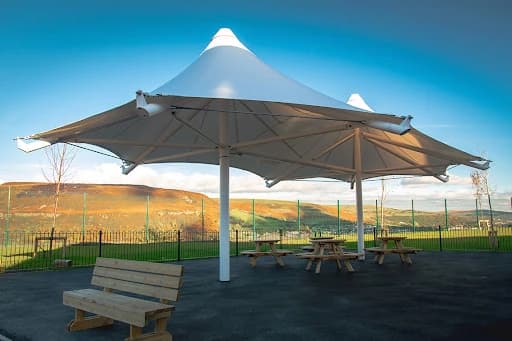
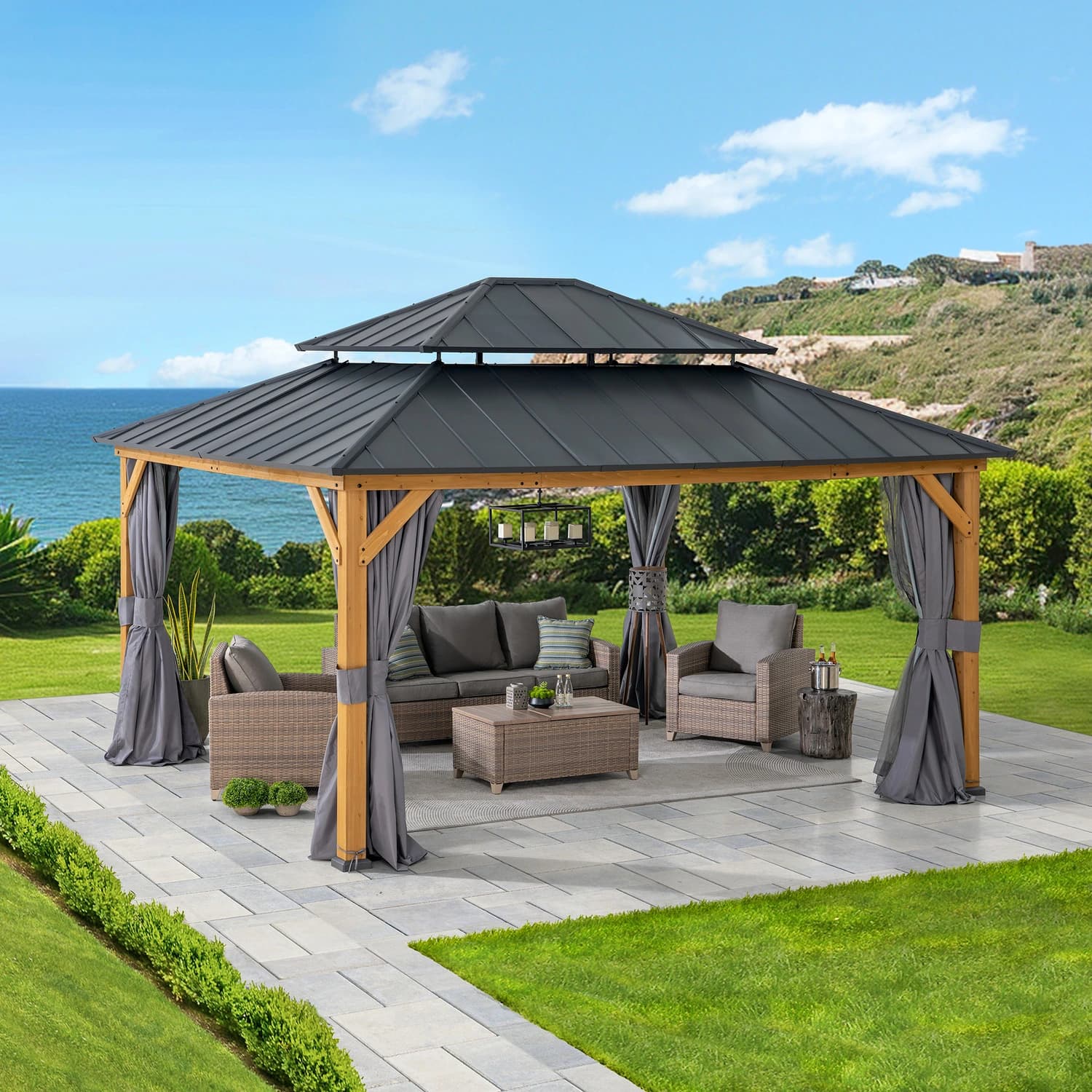
The right structure depends on three variables: span (how much area needs covering), permanence (temporary, seasonal, or permanent), and the priority between aesthetics and economy. Car parking shades cover one to several hundred vehicles using top-support, bottom-support, cantilever, K-span, pyramid, or tensile-roof configurations. Pergolas suit villa pool decks, restaurant terraces, and rooftop entertainment spaces — typically aluminium, wood, WPC, or GRP, with optional motorised louvers. Tensile and sail shades work best for irregular shapes, walkways, school playgrounds, mosques, and feature-statement architecture. Tents (Pyramid, Marquee, Dome, Pagoda, Majlis) suit events, hospitality, and seasonal installations. Umbrellas, canopies, and gazebos handle smaller dedicated areas like pool decks, cafes, or garden seating. We help match the structure to the use-case at the site-survey stage rather than upselling a default product.
How does shade structure design change between Dubai, Abu Dhabi, and Sharjah?+
The structural engineering is the same across the UAE — Dubai Municipality, Abu Dhabi DMT, and Sharjah Municipality all reference the same wind-load and structural codes (UBC, ASCE) — but the specifications often differ. Coastal Abu Dhabi projects (Corniche, Saadiyat, Yas) typically use marine-grade aluminium frames or extra hot-dip galvanisation to resist salt corrosion. Inland Sharjah and Dubai projects can use standard hot-dip galvanised steel. Permit submission paperwork differs: Dubai Municipality and Abu Dhabi DMT both accept our engineering submissions directly; Sharjah's permitting is faster for non-permanent structures. Lead times are roughly equivalent across all three emirates because every project is fabricated at our single Sajja facility.
Which shade fabrics are best for the UAE's UV and heat?+
Four fabrics dominate UAE installations. PVDF-coated PVC (e.g. Mehler, Sioen, Serge Ferrari) is the workhorse for car parking shades and tensile sails — 5–10 year warranty, self-cleaning surface, excellent UV resistance, 30–50% lower heat transmission than uncoated PVC. HDPE knitted shade cloth is the economy option (95% UV block, 5-year warranty) for playgrounds, livestock paddocks, and back-of-house areas. PTFE membrane (Saint-Gobain Sheerfill, Verseidag) is the premium architectural fabric — 25+ year service life, used on landmark projects but at 3–4× the cost. PE tarpaulin and shade cloth are temporary-use materials only. For permanent UAE installations exposed to direct sun, PVDF-coated PVC delivers the best price-to-life ratio. We carry samples of all four for site visits.
What structural frame materials work in the UAE climate?+
Hot-dip galvanised steel is the default for permanent inland installations — the zinc layer protects the underlying steel from the UAE's surface temperature cycles and occasional rain. For coastal installations within 500 m of the shoreline (Marina, Palm Jumeirah, Saadiyat, Corniche), we typically specify marine-grade aluminium or extra-thick galvanisation because chloride-laden air accelerates corrosion. Wood (cedar, pine) is used in pergolas where aesthetics dominate — it requires periodic sealing in the UAE climate. WPC (wood-plastic composite) and GRP (glass-reinforced plastic) are maintenance-free alternatives suitable for villas and hospitality. Every structural specification is determined at site survey based on location, exposure, and structural geometry.
Do I need a municipal permit for a shade structure in the UAE?+
Permanent shade structures generally do require municipal approval in Dubai, Abu Dhabi, and Sharjah. Residential car parking shades attached to villa boundaries often require approval through the relevant master community or municipality. Commercial structures — parking decks, mall canopies, school playground shades — always require structural drawings, load calculations, and a stamped engineering submission. Our in-house engineering team prepares the full submission package and handles the back-and-forth with the relevant authority on the client's behalf. Tents and temporary event structures usually do not require permits but may require event-specific authorisations. Pergolas attached to villas typically require approval from the property's master community or developer.
What is the typical timeline for a UAE shade installation?+
Residential installations (1–4 car bays, single pergola, pool umbrella package) typically complete in 3–7 days from contract signing — including site survey, shop drawings, fabrication, transport, foundation prep, and final installation. Medium commercial projects (10–50 bay car parking decks, hotel cabana clusters) usually run 2–4 weeks. Large multi-phase projects (community-wide parking shades for villa compounds, hospitality master plans) are typically scheduled in 4–12 week phases with installation aligned to property handover or operational calendars. Custom architectural tensile structures and large PTFE feature installations are quoted with project-specific schedules — usually 6–14 weeks depending on geometry and approvals.
Do you provide warranty and after-sales service across the UAE?+
Yes. Fabric warranty is 5 years on HDPE shade cloth, 5–10 years on PVDF-coated PVC, and 10+ years on PTFE membrane. Structural warranty is 10 years on hot-dip galvanised steel and marine-grade aluminium against manufacturing defects. All warranty work is handled directly by our Sajja team — we do not subcontract claims to third parties. Typical fabric replacement under warranty is completed within one week of inspection. We also offer paid maintenance contracts for large commercial portfolios where annual inspection, fabric tensioning, fastener checks, and pressure-washing are bundled into a single service agreement.
Can I get custom designs, sizes, colours, and finishes?+
Yes — custom is standard for our business. Fabric is available in approximately 30 PVDF-coated colours and any RAL colour with custom orders; structural frames can be powder-coated in any RAL finish. Geometric configurations are not limited to standard product profiles — we routinely design bespoke conical, hyperbolic, asymmetric, and free-form structures driven by site geometry or architectural intent. CNC-cut pattern shades, motorised louver pergolas, integrated photovoltaic carports, and translucent membrane roofs are all available. Custom designs add roughly one week to the lead time for engineering and shop drawings but no premium on fabrication once specifications are signed off.
Let’s Build Your Perfect Shade
Your ideal car parking shade is just a call away. Our expert team is ready to guide you with the best solutions tailored to your needs.